


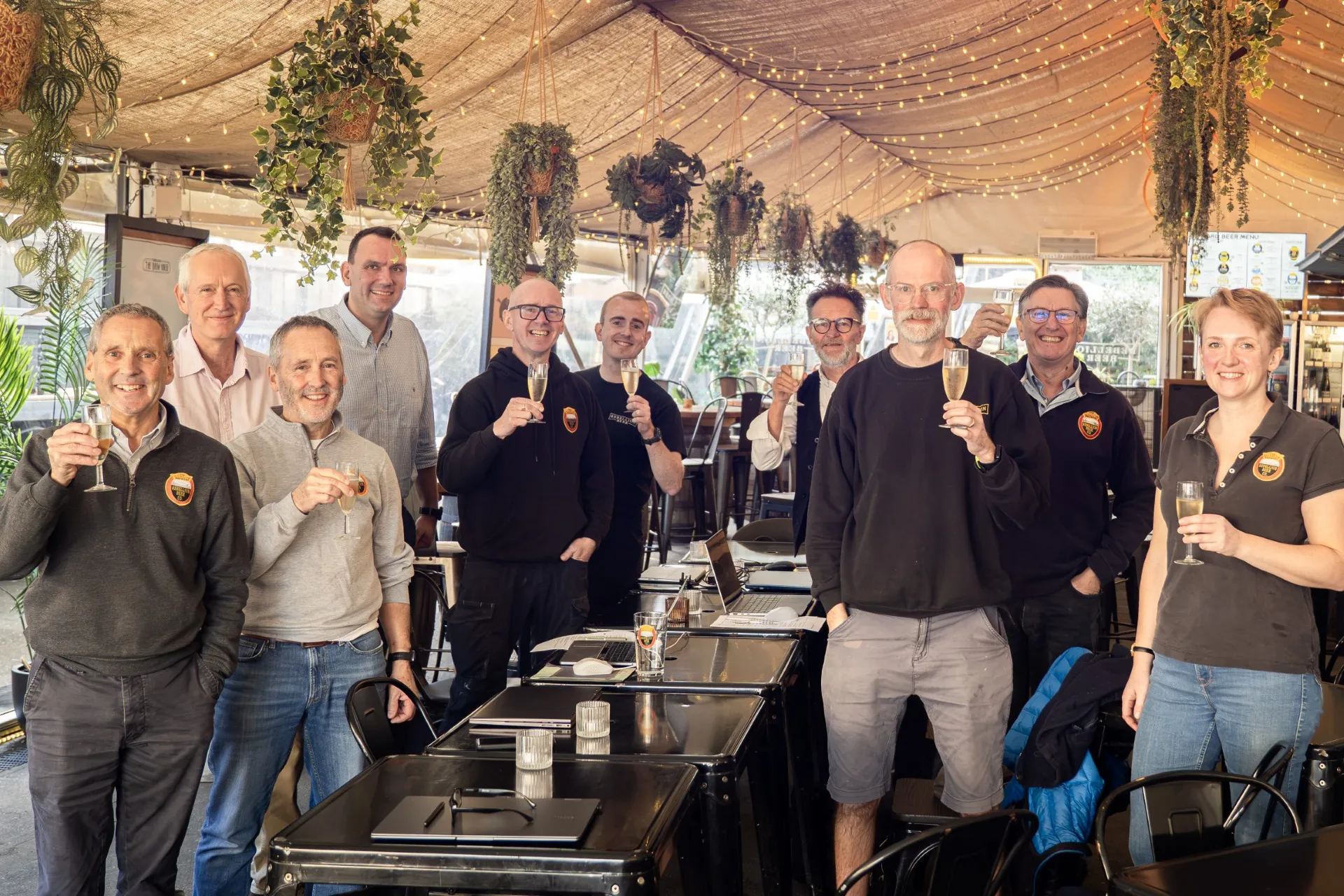
Earlier this month, RVE Corporate Finance advised Rebellion Brewery, the Marlow based brewer, on its sale to an Employee Ownership Trust (EOT). For those of us who have spent years advising owner-managers on EOT transactions, the deal was a satisfying one. It also confirmed something we have believed for a long time: few types of business suit employee ownership as well as the small regional brewery.
The succession dilemma facing independent brewers
Many of the UK's best-loved regional breweries were founded in the 1980s, 1990s and early 2000s, during the real ale revival and the craft beer boom that followed. Their founders built more than businesses. They built local institutions, with loyal drinkers, long-serving staff and close ties to the pubs, shops, clubs and communities around them.
Many of those founders are now thinking about succession, and the traditional exit routes are not always suitable.
A trade sale to a larger brewer or drinks group can deliver a headline price. It also very often means the end of the business as people know it. The industry has many examples of much-loved local brands bought, absorbed into a national portfolio, and in time moved to a central brewing site or quietly dropped. The brewery that gave its name to the beer becomes a memory, and the local jobs go with it.
A private equity sale brings a different set of pressures: an investment horizon of three to seven years, leverage on the balance sheet, and a plan built around aggressive growth, cost control and a further exit. That rarely fits a business whose value lies in its consistency, its heritage and its patient relationships with customers.
A management buy-out can work well, but it depends on having a management team in place that has the risk appetite and the right skill set.
For many brewery owners, none of these options feels quite right. They want fair value for what they have built but they also want to know that the brewery they created will still be brewing, in the same place, with the same people, long after they have stepped back.
That is where the Employee Ownership Trust comes in.
What is an EOT?
An Employee Ownership Trust is a trust that acquires a controlling interest (more than 50%, and most often 100%) in a company for the long-term benefit of all its employees. The selling shareholders are paid a market value for their shares. That consideration is usually funded partly from the company's existing cash reserves and partly from future profits, paid over a period of years, sometimes topped up with third-party bank debt.
The legislation around EOTs was first introduced in 2014 and adoption is growing. There are now well over 2,500 employee-owned businesses in the UK, across almost every sector. The legislation has been refined since then, notably to strengthen the independence and UK residency of the EOT corporate structure, but the core attraction remains. Selling shareholders get a highly tax-efficient exit at fair market value (CGT is charged at 12% rather than the standard 24% rate), and the business moves into stable, long-term ownership. Employees can also receive profit share bonuses with preferential income tax treatment (up to £3,600 per year per employee is free of income tax).
Independence: the brewery stays the brewery
A compelling feature of an EOT, for a regional brewer, is that the business stays independent.
There is no acquiring group, no parent company and no change of brand strategy from a boardroom 200 miles away. The trust holds the shares for the benefit of the employees, and the business carries on being run by the people who know it best.
This matters especially in brewing. Independence is not just sentiment. It is part of the product. Drinkers increasingly look for, and are willing to pay for, beer from genuinely independent producers. Industry bodies have built whole accreditation schemes around independent status, and many free trade customers, farm shops and local retailers actively prefer to stock independent local brands. A brewery sold to a multinational can lose that positioning overnight - a brewery sold to its own employees arguably strengthens its independent position.
Independence also protects the things that make a regional brewery special:
- The recipes and brewing approach. Flagship beers that have been brewed the same way for decades are not "rationalised" to suit a group-wide production plan.
- The supplier relationships. Local maltsters, hop growers and other suppliers keep a customer who values continuity.
- The pub and trade relationships. Licensees who have dealt with the same brewery for years keep dealing with the same people.
- The culture. The working atmosphere that founders spent years building is handed on, not overwritten.
EOT ownership also tends to reinforce independence over time. Because the employees have a real stake in the business's success, there is a strong shared interest in keeping it thriving on its own terms, rather than positioning it for another sale.
The geographic "fix": rooted in place
The second feature that makes EOTs so well suited to regional brewers is what we sometimes call the geographic fix.
Under a trade sale, location is often the first thing to go. An acquirer looking for synergies will ask why it needs two breweries, two warehouses and two head offices. Consolidation onto a single site is a common outcome, and the local workforce bears the cost.
An EOT works the other way. The employees are the beneficial owners, and they live and work where the business is. Employee-owned businesses are, almost by definition, anchored to their communities. There is no commercial logic, and no appetite, for the owners to move their own jobs to another region. In practice, the great majority of EOT-owned businesses stay exactly where they were founded.
For a regional brewery, that geographic fix is extremely valuable:
- The "local" in local beer stays true. A beer named after a town, river or landmark keeps its authenticity when it is still brewed there.
- Local employment is protected. Brewing, packaging, logistics, sales and hospitality jobs stay in the community.
- The brewery's community role continues. Many regional brewers are woven into local life through brewery shops, tap rooms, tours, festivals, sports sponsorships and charity work. Those commitments carry on under employee ownership.
- The local supply chain benefits. Money keeps circulating within the regional economy rather than flowing to a distant parent.
For founders who have spent decades building something their town is proud of, this is often the deciding factor. An EOT lets them step back knowing the brewery will stay part of the place that made it.
Why breweries make strong EOT candidates commercially
Beyond independence and place, regional breweries often have the financial and operational features that make an EOT workable:
- Steady, predictable cash flows. Established brewers with a loyal customer base and a mix of direct, free trade and retail channels often produce reliable earnings, which are well suited to funding deferred consideration.
- Strong balance sheets. Many have built up cash reserves and own valuable property and equipment, which can help fund the initial payment to sellers.
- Experienced, long-serving teams. Breweries often have deep pools of expertise among staff who have been there for years and are ready to move into leadership roles when the founders retire.
- A culture of craft and pride. Brewing attracts people who care about what they make. That is exactly the mindset that employee ownership rewards and amplifies.
None of this means an EOT suits every brewery. Funding structures need to be set with care, so the business is not over-stretched while consideration is being paid. Governance needs to be carefully designed, and the next generation of leadership needs to be in place. That is why specialist advice matters.
RVE's experience: from Marlow and beyond
At RVE Corporate Finance, EOT transactions are a core specialism. Our recent work advising Rebellion Brewery on its move to employee ownership is a clear example of how the model can secure the future of a much-loved independent regional brewer: keeping it independent, keeping it in Marlow, and rewarding the people who helped build it.
Our EOT experience goes well beyond brewing. We have advised owner-managers on employee ownership transactions across a wide range of sectors, including manufacturing and engineering, professional services, technology, distribution, construction and consumer businesses. That breadth gives us a practical understanding of what works, and of the pitfalls to avoid, across a wide range of business types.
Our work typically covers:
- Initial feasibility assessment: Is an EOT the right route for you, your business and your employees?
- Valuation: Making sure selling shareholders receive fair market value.
- Funding structure: Designing a payment profile the business can comfortably support.
- HMRC clearances and tax coordination: Working alongside your legal and tax advisers.
- Trust and governance design: Covering trustee appointments and the ongoing relationship between the trust board and the company board.
- Management succession: Helping plan a management structure to facilitate the eventual retirement of the founders (including appropriate incentivisation)
- Employee communication: Helping you introduce employee ownership to your team in a way that builds engagement from day one.
We understand that for most business owners, selling their business is the biggest financial and emotional decision of their working lives. We take the time to understand what matters to you, not only the price, but the legacy.
Thinking about the future of your brewery?
If you are an owner, founder or shareholder in a regional or independent brewery and you are starting to think about succession, or simply want to understand your options, we would be delighted to talk.
An EOT could let you realise fair market value for your shares in the most tax efficient manner, reward the team who helped you build the business, and make sure your brewery stays independent and rooted in its community for generations to come.
The team at RVE will help you understand the process, the likely value and the structure. You can then decide on your next step with confidence. Contact details are shown below.
Cheers to the future of independent brewing!
Tom Lethaby
Email: tom.lethaby@rvecf.com
Tel: 07866 563446